Behind the Shingles: Is Modular Better Than Stick-Built Construction?
By Dave Armanetti, Director of Real Estate Development
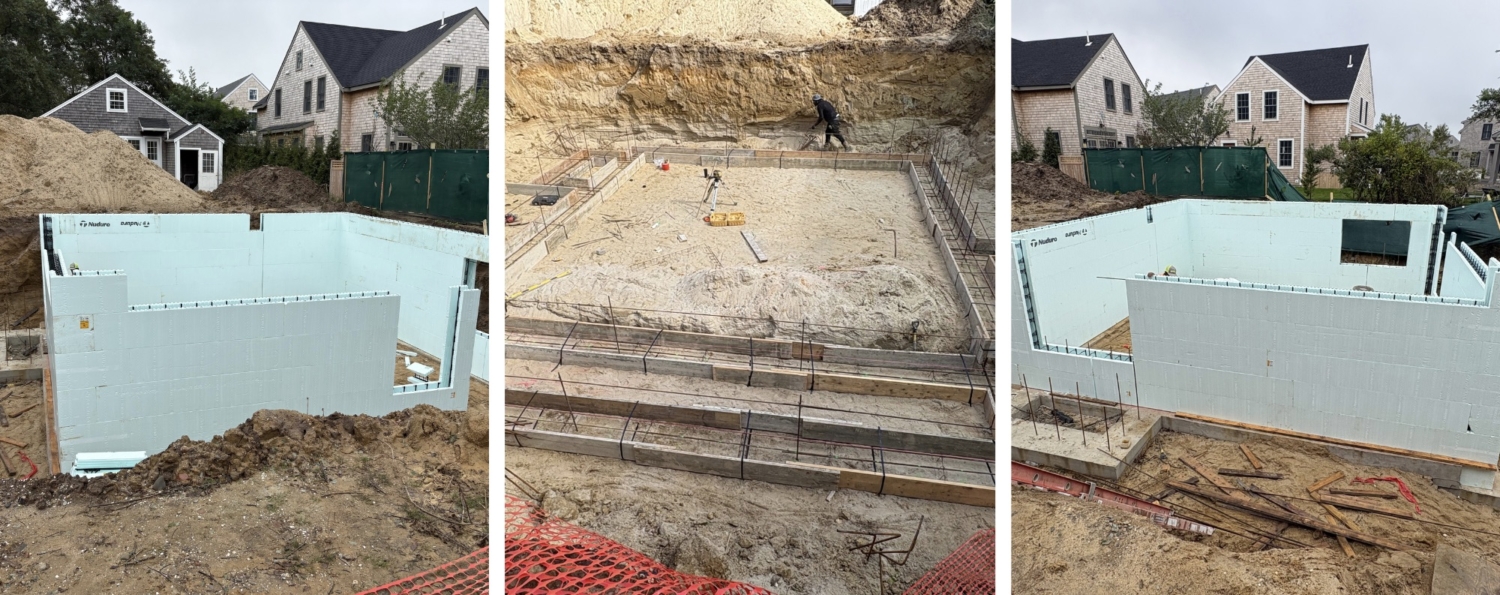
As we break ground on three new one-bedroom rental homes at 75 Old South Road, construction is actually happening in two places at once. While the foundation takes shape on Nantucket, the modular boxes that will become the apartments are being fabricated at a factory in Pennsylvania through our partnership with Nantucket-based Dreamline Modular Homes.
It raises a question we hear often: Is modular construction better than traditional stick-built construction on Nantucket?
The answer isn’t simple.
First, it’s important to understand what isn’t different. Modular homes use the same or similar materials as stick-built homes, from framing and flooring to windows, doors, trim and fixtures. They also must comply with the same state and local building codes and safety standards. The major differences are where the structure is built and how the construction schedule unfolds.
Building Inside vs. Building Outside
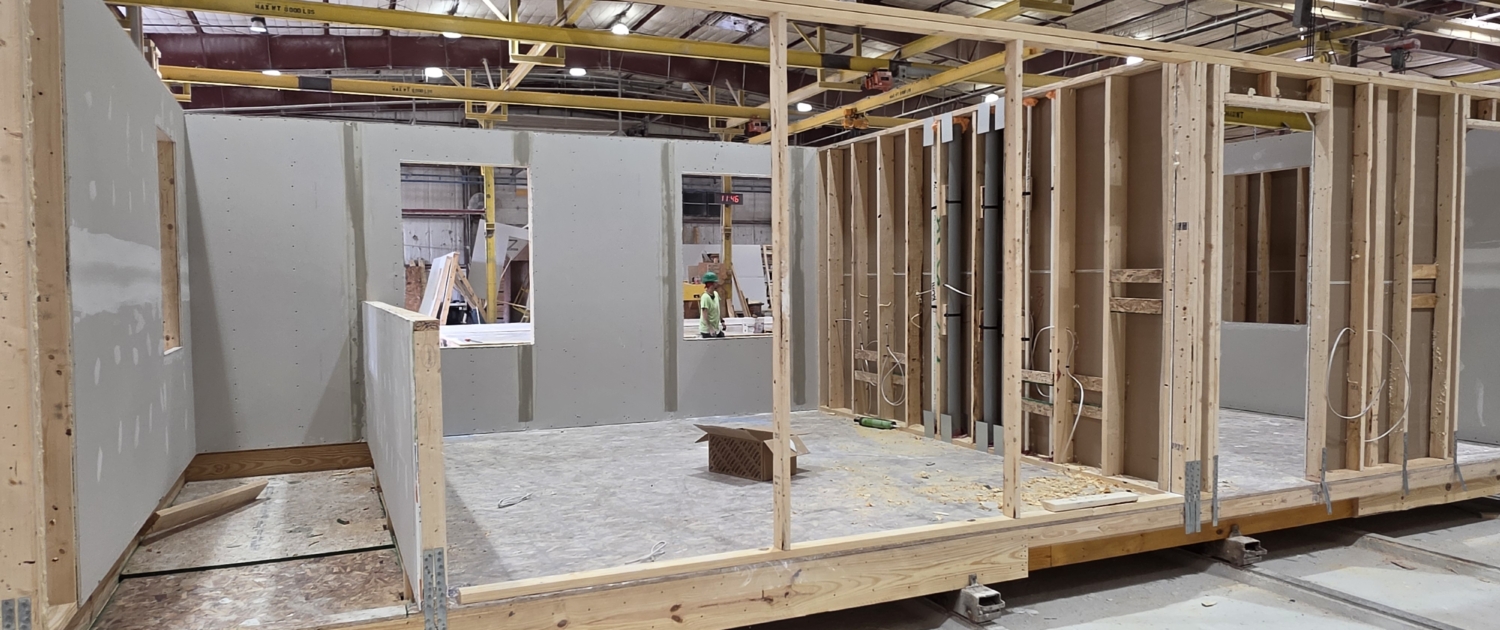
With traditional stick-built construction, crews assemble the structure at the project site. Modular construction moves much of that work inside a factory, where temperature and humidity are controlled and construction can continue regardless of rain, snow or cold temperatures.
That controlled environment doesn’t just help with scheduling. Building materials aren’t exposed to moisture and temperature changes during construction, which can affect wood, adhesives, paint and other materials. Factory conditions can also allow for more precise measurements during assembly.
On Nantucket, these differences can be especially significant. Every piece of lumber, every window and door, and virtually every other material needed to build a home must first travel more than 20 miles across the water before reaching the job site. Skilled labor can also be difficult and expensive to secure, particularly when a project requires numerous contractors and subcontractors on site over many months.
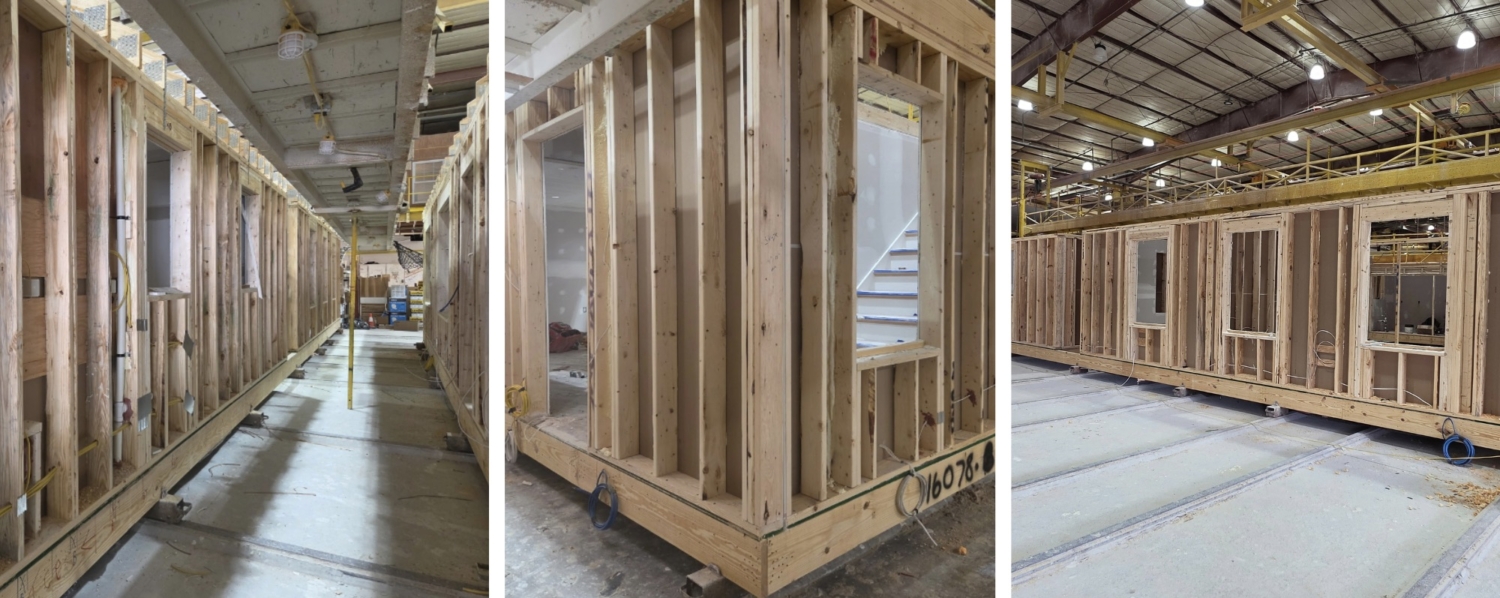
The modular boxes for 75 Old South Road taking shape on the factory floor in Pennsylvania.
Time Is Money
One of the biggest advantages of modular construction is the ability to do two things at once. While the site and foundation are being prepared on Nantucket, the building itself can be taking shape hundreds of miles away.
Once a foundation is complete, a traditional stick-built home can generally take another six to nine months to finish. With modular construction, the modules arrive at the site largely complete. Once they are set on the foundation and the remaining connections and finish work are completed, the overall construction timeline can be considerably shorter.
That predictability has financial value. A shorter construction period can reduce interest expense, insurance, general conditions and other carrying costs that continue for as long as a project remains under construction. In some cases, those savings can help determine whether a project is economically viable in the first place.
So Why Isn’t Everything Built This Way?
Because modular construction comes with its own tradeoffs.
It requires considerably more capital upfront. Modular manufacturers generally require substantial deposits to reserve factory space and begin fabrication, and developers may need to pay for the modules before lenders are willing to advance construction funds. For smaller or less well-capitalized developers, that can be a significant hurdle.
Design and site conditions matter, too. Modules need to fit on trailers for transportation, which places parameters around their dimensions. A project site must have enough access for large trailers and the crane required to lift the modules into place. Nantucket’s 30-foot building height limit and traditional steep roof pitches can also create design challenges for modular buildings.
Then there is the challenge unique to building on an island: getting the modules here. Deliveries have to be carefully coordinated among the factory, trucking company, barge, crane and construction crews. Nantucket also restricts this type of barge traffic and transportation over local roads during the busiest summer months. Weather and high winds can disrupt even the best-planned delivery schedule.
And once fabrication begins, you really don’t want to change your mind. Because so much of the building is completed before it reaches Nantucket, significant changes later in the process can be difficult and expensive.
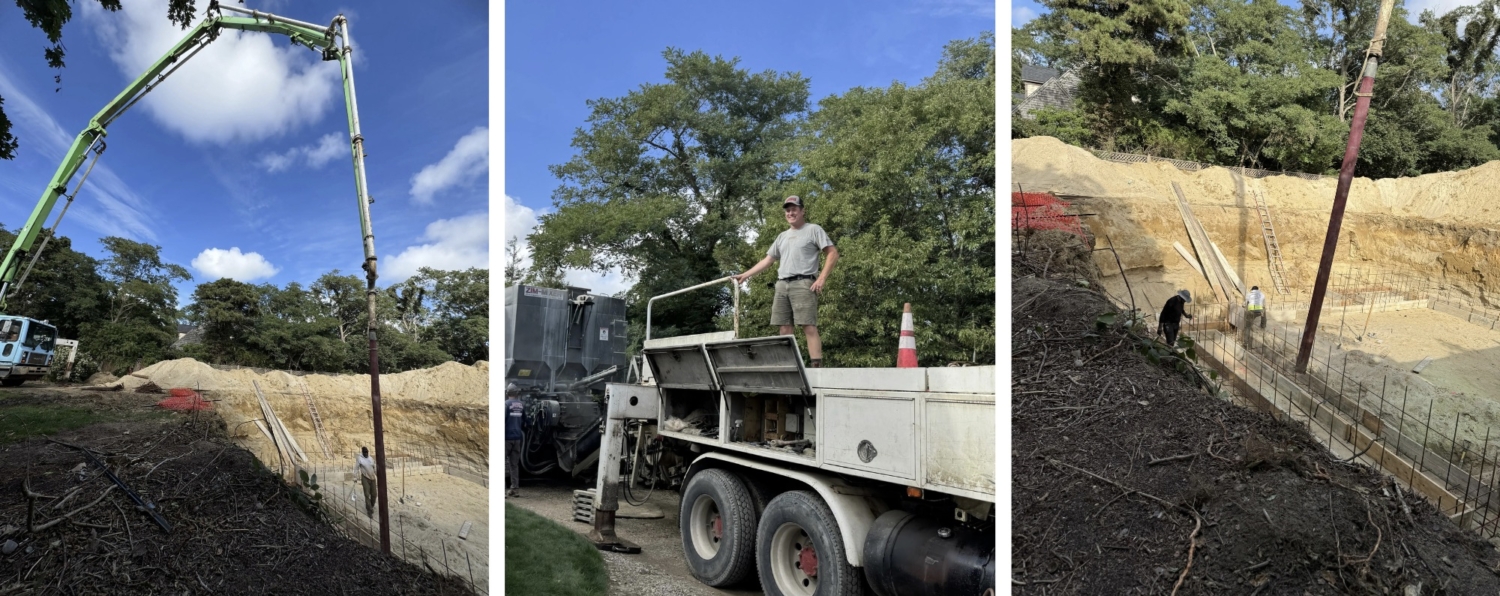
Barrett Enterprises prepares the foundation at 75 Old South Road while the modular boxes are being built in Pennsylvania.
Why Modular Made Sense at 75 Old South Road
For our three new apartments, several factors tipped the balance toward modular.
The construction area at 75 Old South Road is small and tightly constrained. Existing tenants live immediately adjacent to the project, and Housing Nantucket’s staff and visitors continue to use our office throughout construction. We don’t have a lot of room to store lumber, shingles, pipe, equipment and all the other materials required for traditional construction. Building much of the structure off-island reduces both the amount of material stored on site and the duration of construction activity next to our tenants and office.
Timing was another consideration. We are beginning construction in the fall and continuing through the heart of winter. Fabricating the modules indoors reduces our exposure to delays from wind, rain, snow and low temperatures. It also means fewer crews need to spend the winter framing, roofing and shingling outdoors.
So, is modular better than stick-built construction?
Sometimes. For this project, on this site, at this time of year, it made sense.
The real test comes next. When the modules arrive on Nantucket, they’ll make their way from the barge to 75 Old South Road, where a crane will lift them onto the foundation and the work of joining and finishing the building will begin.
We’ll take you Behind the Shingles again when they arrive.